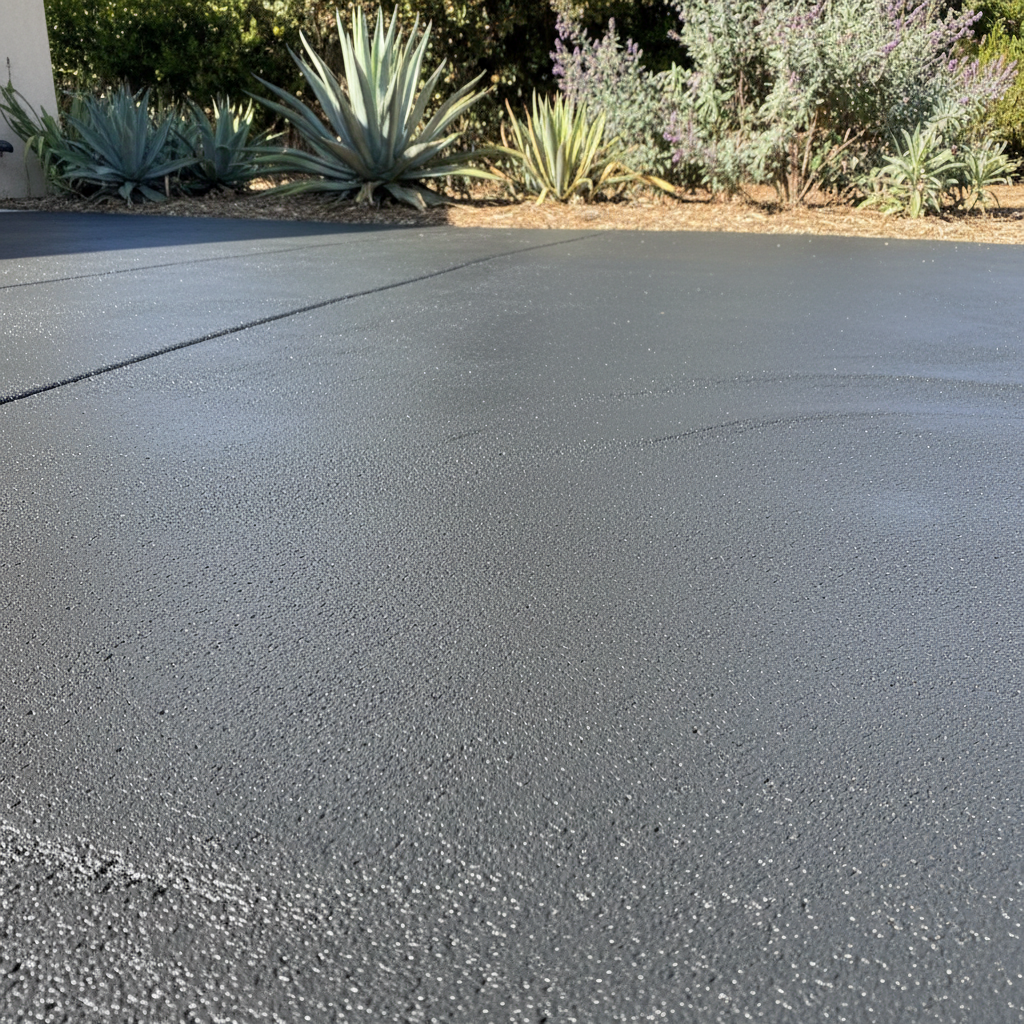
Driveways in Irvine experience high heat during the summer months, and asphalt often turns into a faded, tired gray color. The Southern California sun bakes the natural oils out of asphalt pavement, leaving it dry, brittle, and vulnerable to damage. When an asphalt surface shows minor wear but is not completely falling apart, a Slurry Coat is a good option. Property owners need to know what to handle themselves and when it is time to bring in a paving contractor like Coastal Paving.
What a Slurry Coat Actually Does
Unlike a thin seal coat applied by hand, a Slurry Coat consists of a heavy mixture. The Slurry Coat is a precise blend of asphalt emulsion, water, polymers, and fine aggregate rock. This mixture gives asphalt pavement a new wearing surface. The Slurry Coat fills minor surface cracks, locks out moisture, and provides a textured, durable wearing course that handles daily vehicle traffic much better than standard sealants. For neighborhoods around Irvine, keeping that top layer sealed is important because clay-heavy soils and shifting foundations can stress flatwork.
Before You Start: Preparation and Reality Checks
Property owners need to know that a Slurry Coat application is not a DIY weekend project. Applying a proper Slurry Coat mix requires specialized tanker trucks, calibrated spreader boxes, and professional mixing equipment. Trying to pour this material out of buckets will only leave an uneven mess on the asphalt.
However, there is preparation work you can complete before Coastal Paving arrives:
- Clear every vehicle, trailer, and sports equipment off the asphalt at least twenty-four hours in advance.
- Scrub away stubborn oil drips with a heavy-duty degreaser so the new Slurry Coat can bond properly.
- Walk the perimeter and pull weeds from the edges where the asphalt meets concrete walkways or landscape borders.
If you have major structural cracks wider than a half-inch or actual potholes, those need separate patching before any Slurry Coat goes down. A Slurry Coat is strictly a preventive maintenance tool, not a structural fix.
During the Application
On the day of the project, the work moves fast. The crew will thoroughly clean the surface using industrial blowers and mechanical sweepers to pick up dust and debris. Then, the slurry machine applies a smooth, consistent Slurry Coat across the entire drive. You will want to stay completely off the pavement while the Slurry Coat goes down. The rich, jet-black finish looks striking immediately, but do not let its clean appearance fool you into walking on it too early.
After the Coat: Curing and Protection
Once the Slurry Coat application is complete, patience is important. In the dry Irvine climate, the Slurry Coat surface usually sets up enough for light foot traffic within twenty-four hours. Keep vehicles off the asphalt for at least forty-eight hours to avoid scuffing or tearing the fresh aggregate. When you finally park your car back in the driveway, avoid sharp-wheel turns while stationary for the first couple of weeks. Power steering maneuvers while the car is not moving can twist and scar the new Slurry Coat surface before it fully cures.
Coastal Paving provides Asphalt Contractor services for homes in Irvine, CA.